
TF/2025
In 2025, for the first time, the Tom Fund made awards to graduating 3rd year BA Design students to support projects beyond the degree program. Two winners received a £1000 unrestricted award and a £500 mentoring allowance, and a third project received a special award of £250.
You can read more about both winning projects, as well as the Special Award winners below.
Winners
We
Gen Davies
If a Lichen Built a House
Olivia Webb
We
Gen Davies
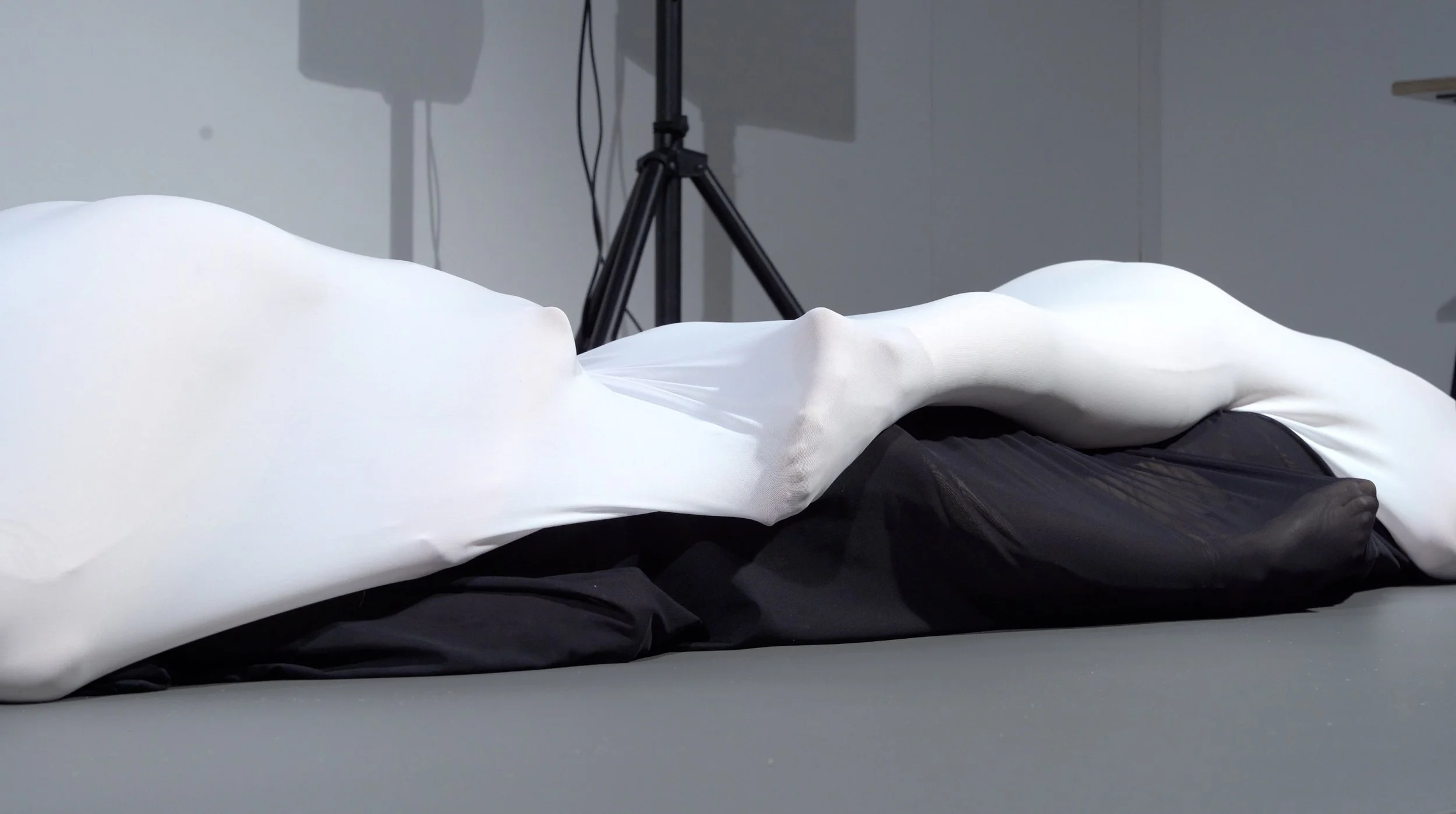
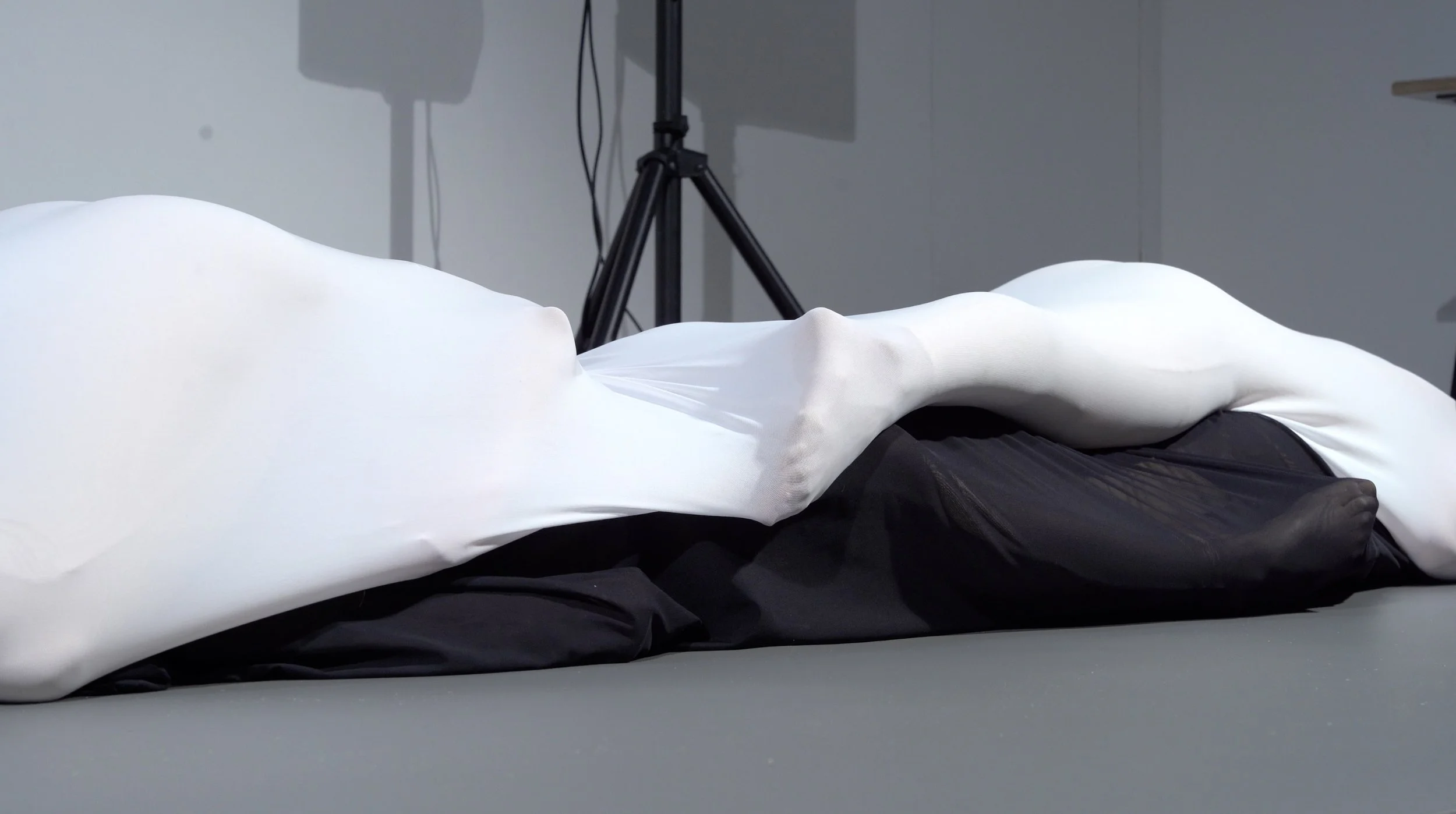
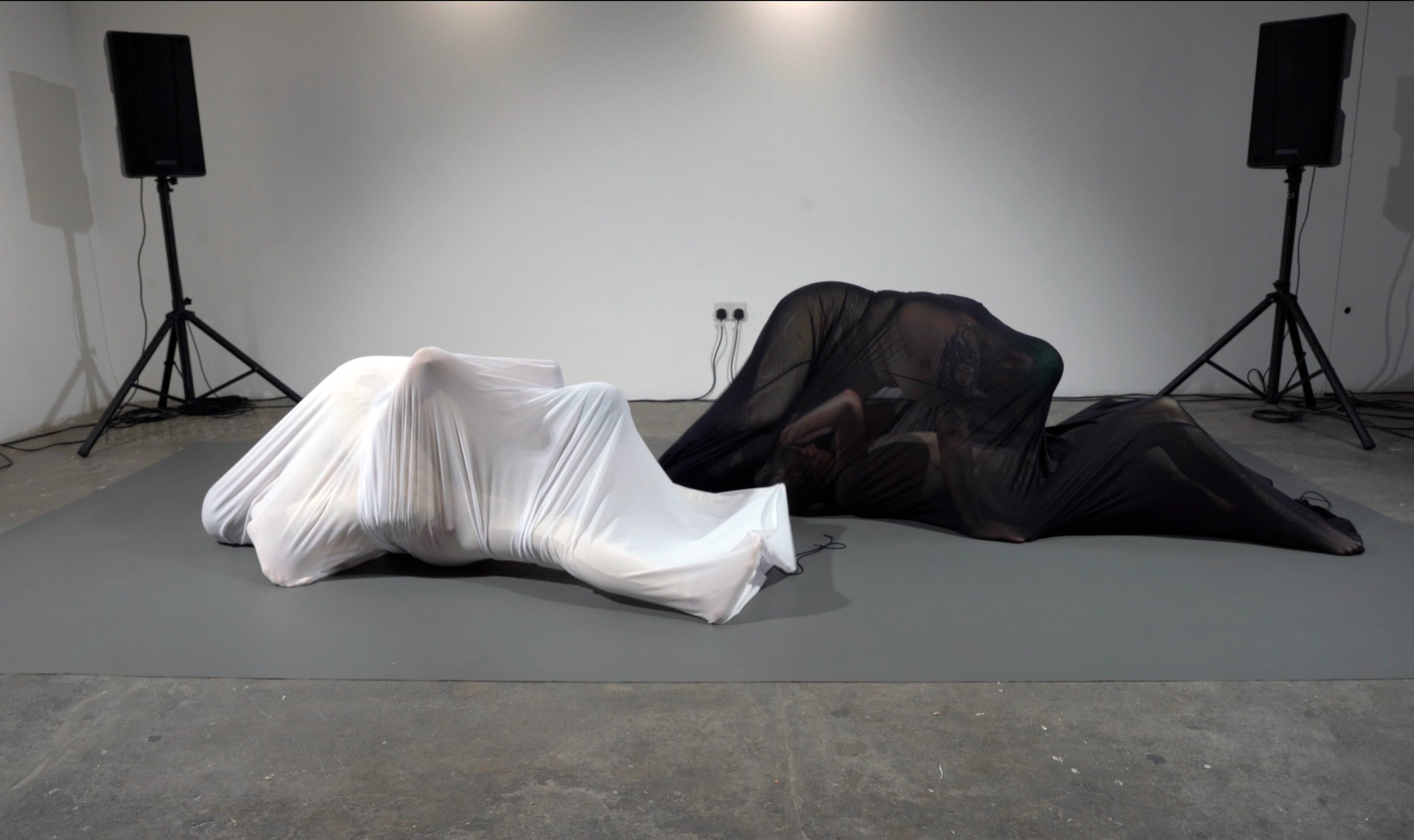
Still from We performed June 2025 at Copeland Gallery, by Aidan Schramm
We is a live movement and sound performance that combines multiple bodies and layered audio to explore ways of forming connection across difference. Through choreography and recorded sound, the piece creates a site of in-betweenness where contradictory voices and experiences exist side by side. Rather than presenting a single narrative, We invites audiences into an acoustic and physical space shaped by overlap, tension, and proximity. It asks both “can we listen to each other’s noise and allow it not to be the same?” and “can we create a rhythm, a system of togetherness?”
The project was born from a desire to understand conflicting and ‘hyphenated’ narratives as part of my personal identity, history, and orientation within the world. I am non-binary, lower-middle-class, northern, but born in London, queer, and grew up with a father who was a police sergeant. I wanted to understand how systems of compliance and hegemony shaped and benefited my life, while criminalising the voices of many others and restricting my view of the world. I was taught regiment, order, and obedience, yet as a young adult, I began to learn different ways of living through queer kinship, including how to build community and develop relationships with chosen family outside the constraints I once understood as ‘normal’.
The project began when I discovered a tape within a dictaphone my dad had given me to use for revision. Recorded on it was his police sergeant’s exam. I analysed the language on the tape and compared it to my own and to that of my community. Though very different, both have equally shaped who I am today. I wondered whether it was possible to hold space for these conflicting realities, and whether queer narratives, in the form of voices of my close friends, could slowly override the tape of my father’s compliance with hegemonic order. Movement became central as a way of exploring whether bodies themselves could form a hyphen. These colliding vocal narratives were represented through a ‘hyphenated being’, a life-force made up of multiple partial identities that lean upon each other, shift, and move in non-conventional ways, performing a cycle without resolution.
The first iteration of We was presented as part of my BA Design degree show. The performance was developed collaboratively with four performers, with rehearsals forming a key part of this process. At this stage, abstraction played an important role, allowing multiple voices, movements, and meanings to coexist without being fixed or resolved. Presenting the work publicly highlighted the strengths of its collective nature whilst also making visible the time-based limitations of developing a work during the final year of a university course.
Receiving the Tom Fund award has granted me the time and space to reflect critically on the project beyond its initial presentation. Without the fund, this work may have been put down and deemed ‘finished’. The support has given me confidence to revisit the initial outcome and to value the project beyond its status as a university piece. Through attending live performances, connecting with other practitioners, and engaging in ongoing conversations about the work, I began to understand that We as part of a longer practice. This period of reflection has allowed me to slow down and examine what the project was doing and what it was protecting.
Through these discussions, I recognised how abstraction and multiplicity had functioned as protective strategies within the piece. While these approaches were important at an early stage, development has allowed me to consider how the work might move toward greater specificity and vulnerability. The next phase focuses on refining the work to centre more directly my relationship with my dad, while allowing wider questions of community, power, and inheritance to emerge through this specificity rather than through representation. I am changing the performers within the piece to be my dad and me, bringing him into the work as a present collaborator rather than using his past as material for others to embody. This shift requires care. Rather than flattening his voice into a single narrative of ‘once being a Sergeant’, I want to hold space for complexity, contradiction, and change. I hope this offers audiences a more direct encounter with intergenerational nuance and invites them to sit with questions of listening, proximity, and relational responsibility.
Sound has become central to how I am approaching this next iteration. One way I am creating space for multiple versions of my dad and myself is by focusing on voice and spatial presence: who is heard, where, and how. The first significant use of the funding has been a two-day Spatial Audio Fundamentals course focused on ambisonics at the University of Greenwich. Learning to work with spatial audio allows me to explore echoes between past, present, and future, creating an enveloping experience in which voices move through space rather than remaining fixed. Alongside this, I am developing the physical language of the work through contemporary and somatic movement classes. Once my dad is more available in the new year, I plan to hire rehearsal studios to develop choreography together and to share this refined version of We in Newcastle and potentially London.
I am grateful to the Tom Fund for supporting this process and for allowing this work the time and trust it needs to grow. Having funding attached to the project has opened conversations with professional practitioners and set the foundations for more grounded, ongoing exchanges about practice and development. Rather than pre-selecting a mentor based on admiration alone, I am taking time to build relationships with artists and sound practitioners who are further along in their practice. From these relationships, I will select a mentor who feels aligned with both the aims of the project and the care required in developing it, particularly in composing sound for the next performed version of We between my dad and me.
If a Lichen Built a House
Olivia Webb
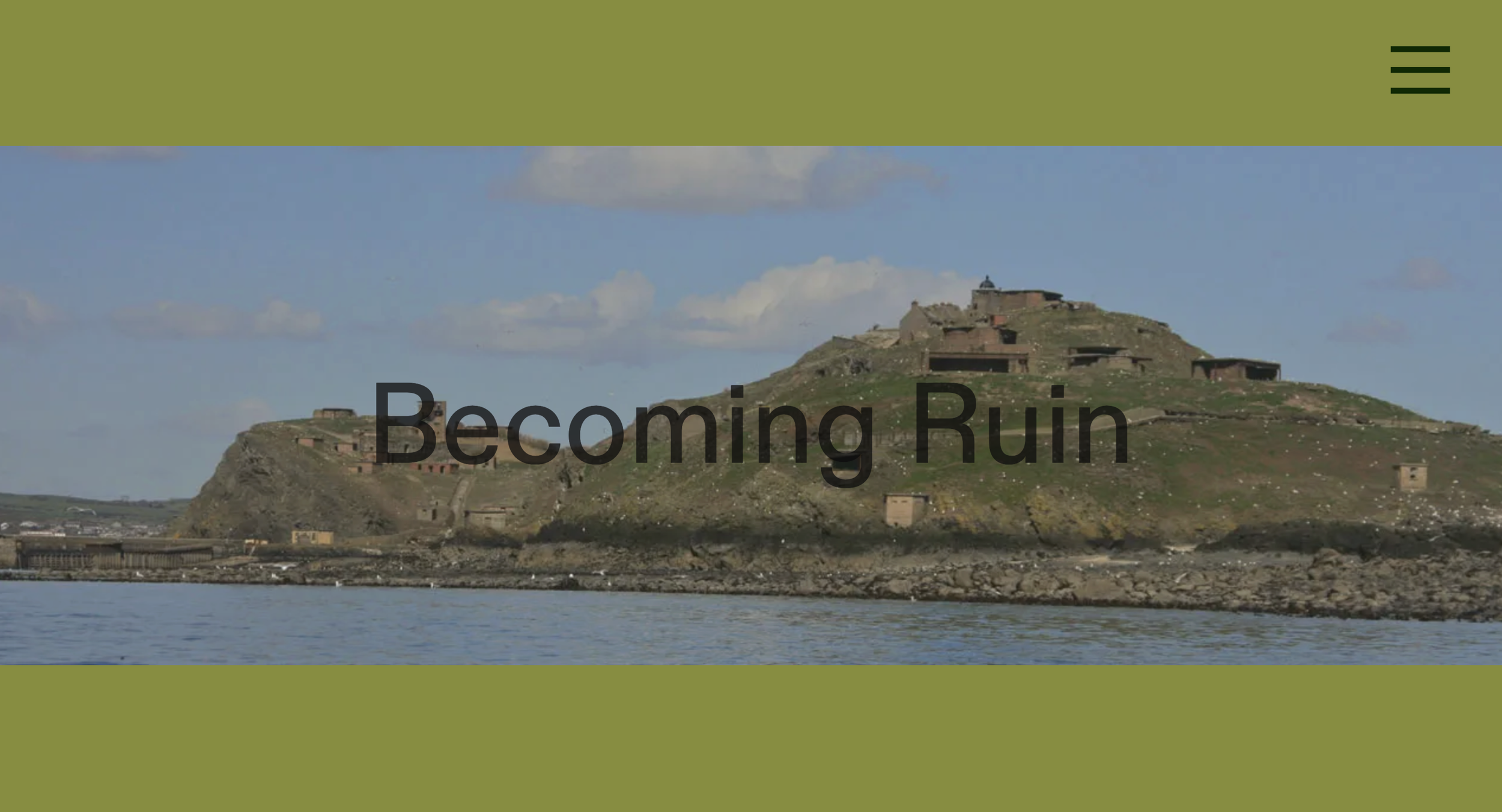
The Becoming Ruin website
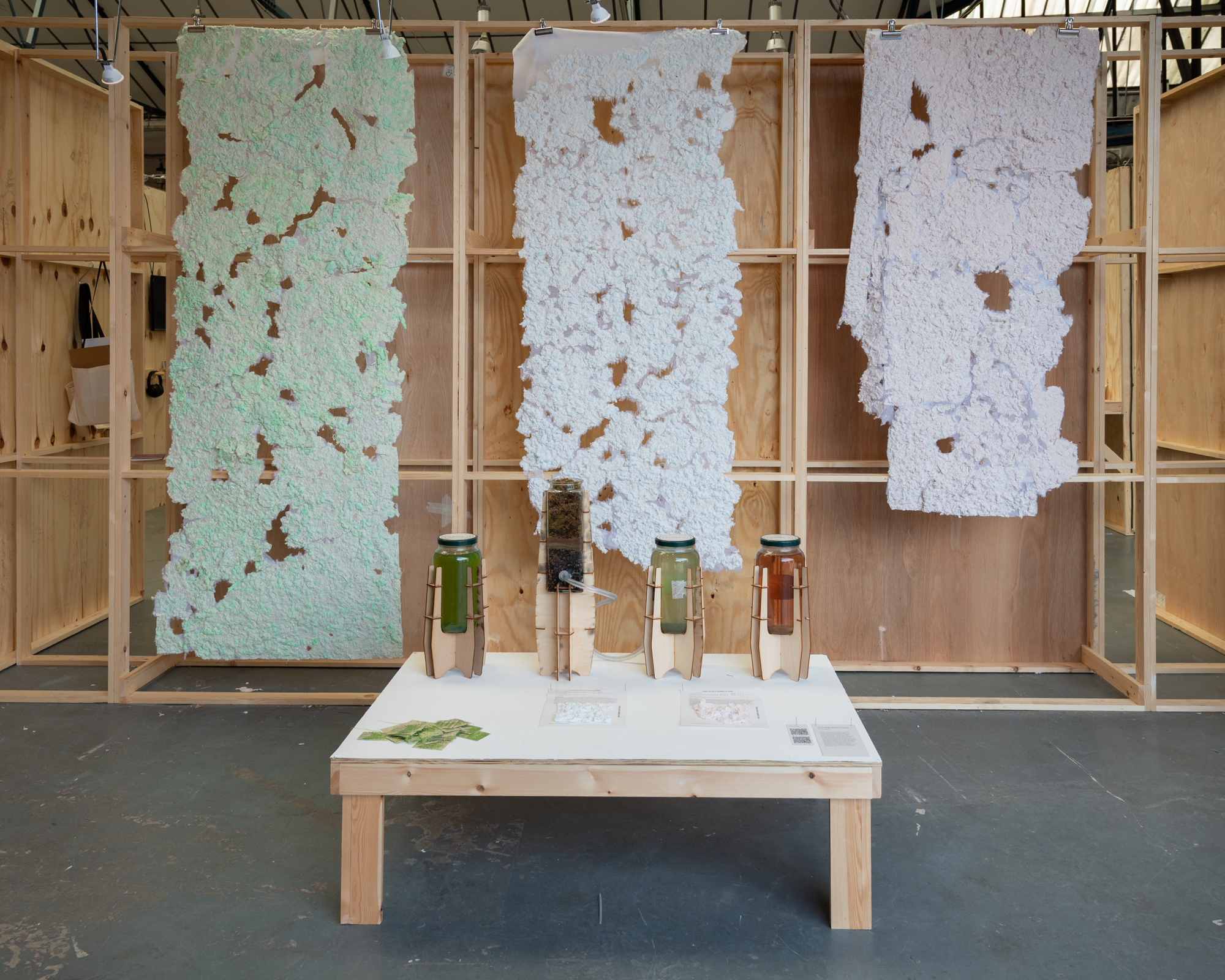
My third-year project at Goldsmiths, If a Lichen Built a House, focused on the development of a swamp-inspired filtration system designed to filter textile dyes and produce large-scale handmade paper. The project took the ethos of its title seriously, using a natural system as a way to propose change within an industrial one.
Lichen is an organism formed through a symbiotic relationship between a fungus and an alga: one providing structure and protection, the other producing energy through photosynthesis. Neither survives in the same way alone. Together, they form a resilient life system capable of inhabiting some of the most inhospitable environments on Earth. Lichen often appears in post-industrial areas, representing regrowth rather than restoration.
If a lichen built a house, it would not be made for speed or perfection. It would grow slowly, working with what already exists rather than erasing it. It would settle into cracks, adapting to uneven surfaces, responding to light, moisture, and time.
Lichen refuses the logic of efficiency, choosing instead a quiet, persistent form of resilience. Growing not despite difficulty, but through it.
In the project, the house represents a system: a manufacturing chain, a textile printing factory, an industrial structure shaped by extraction and control. In my vision, this house is not airtight. It has cracks in its floorboards, spaces where change can creep in, where inconsistency, and fragility might take root. These openings allow alternative ways of working to emerge, ones that are responsive rather than rigid.
The filtration process developed through this work was recorded and tested through fieldwork at the Middlesex Filter Beds, an abandoned industrial site that has since become a wetland. Once part of London’s water infrastructure, the site now operates as an unintended ecosystem, shaped by water, plants, microorganisms, and time. Observing this landscape helped me understand industrial ruin not as an endpoint, but as a condition that enables new forms of life and material processes to appear.
The Tom Fund has allowed me to establish this work as a larger and ongoing research project rather than a single outcome. It funded the expansion of If a Lichen Built a House into a broader framework titled Becoming Ruin.
Becoming Ruin draws heavily on Cal Flyn’s Islands of Abandonment, a book that was a key influence on my third-year project. Flyn’s writing explores post-industrial sites reclaimed by non-human life, documenting how nature re-enters places left behind by industry not as a return to an original state, but as something newly formed and unpredictable. This perspective has greatly shaped how I think about material systems, decay, and regrowth.
I am invested in identifying methods of regrowth within post-industrial landscapes and applying these principles back into contemporary industry. Rather than viewing abandonment as failure, I see it as a space of learning, where alternative systems reveal themselves through time, neglect, and adaptation.
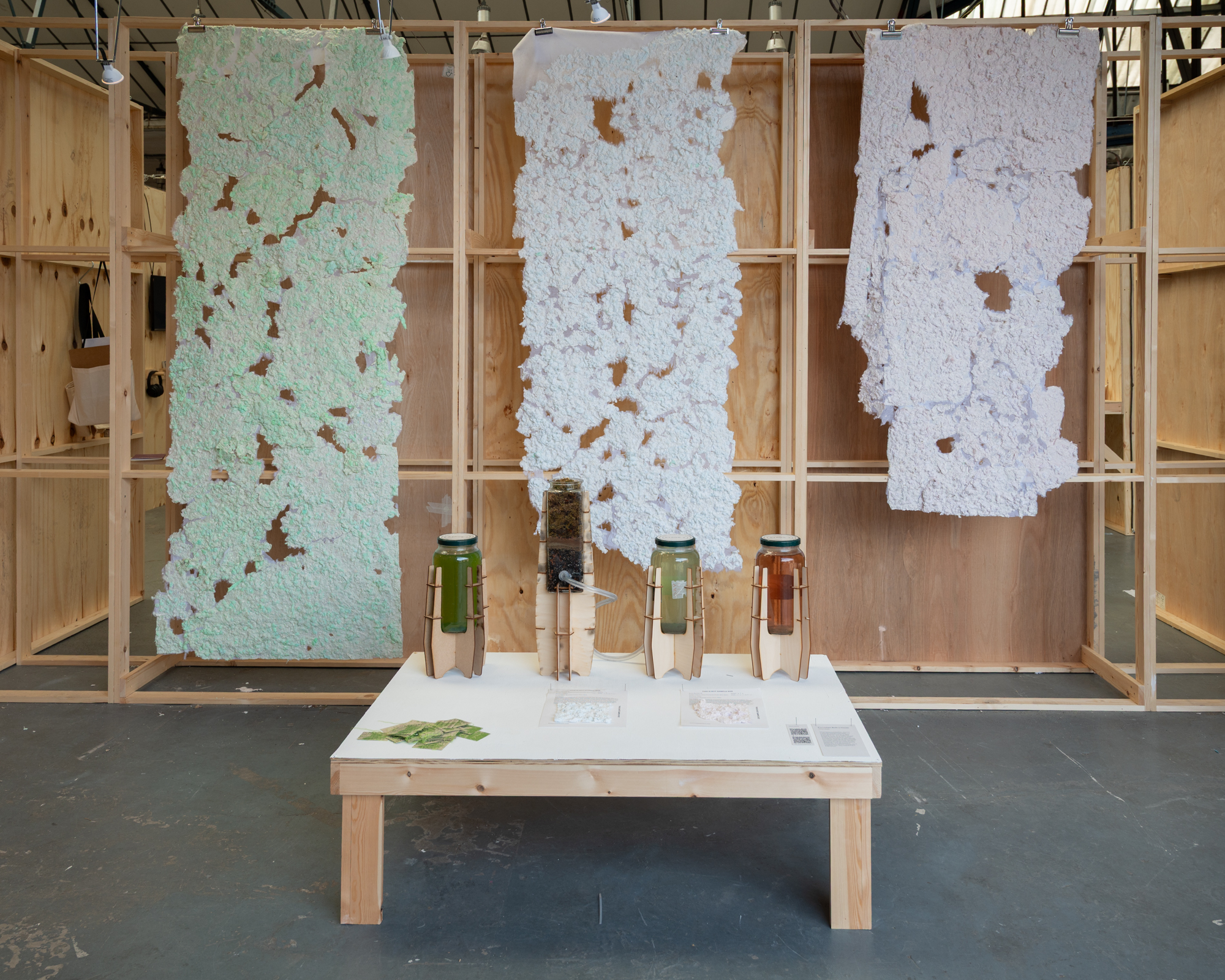
Handmade paper at the Degree Show.
The Tom Fund enabled me to formalize my research through a fieldwork trip to Inchkeith Island. Inchkeith is the first chapter in Flynn’s book, a post-industrial site that now houses hundreds of rare species of moss and lichen. The funding supported not only the practical planning and execution of the trip, but also the continuation of a wider research practice focused on post-industrial ecologies and material processes. With the Tom Fund, I have developed an online platform to share my findings, methods, and ongoing writing, allowing the research to remain open, iterative, and accessible beyond the site itself.
The trip to Inchkeith Island is scheduled for spring. In preparation, I have been building a foundation of tools, methods, and mentor support to underpin the research. I plan to collect site-specific data, work closely with mentors, and reflect on parallel sites of industrial abandonment and ecological return, including those I have already worked with.
This project continues to ask how industry might learn from these places, not by restoring them to productivity, but by listening to the systems that emerge when control is loosened.
I would like to thank the Tom Fund for allowing this research to grow beyond a single outcome. Their support has made space for the work to develop responsively and in relation to the environment it engages with.
Special Award
‘POST GRAD’
Jacob Icke & Eliza Jacques
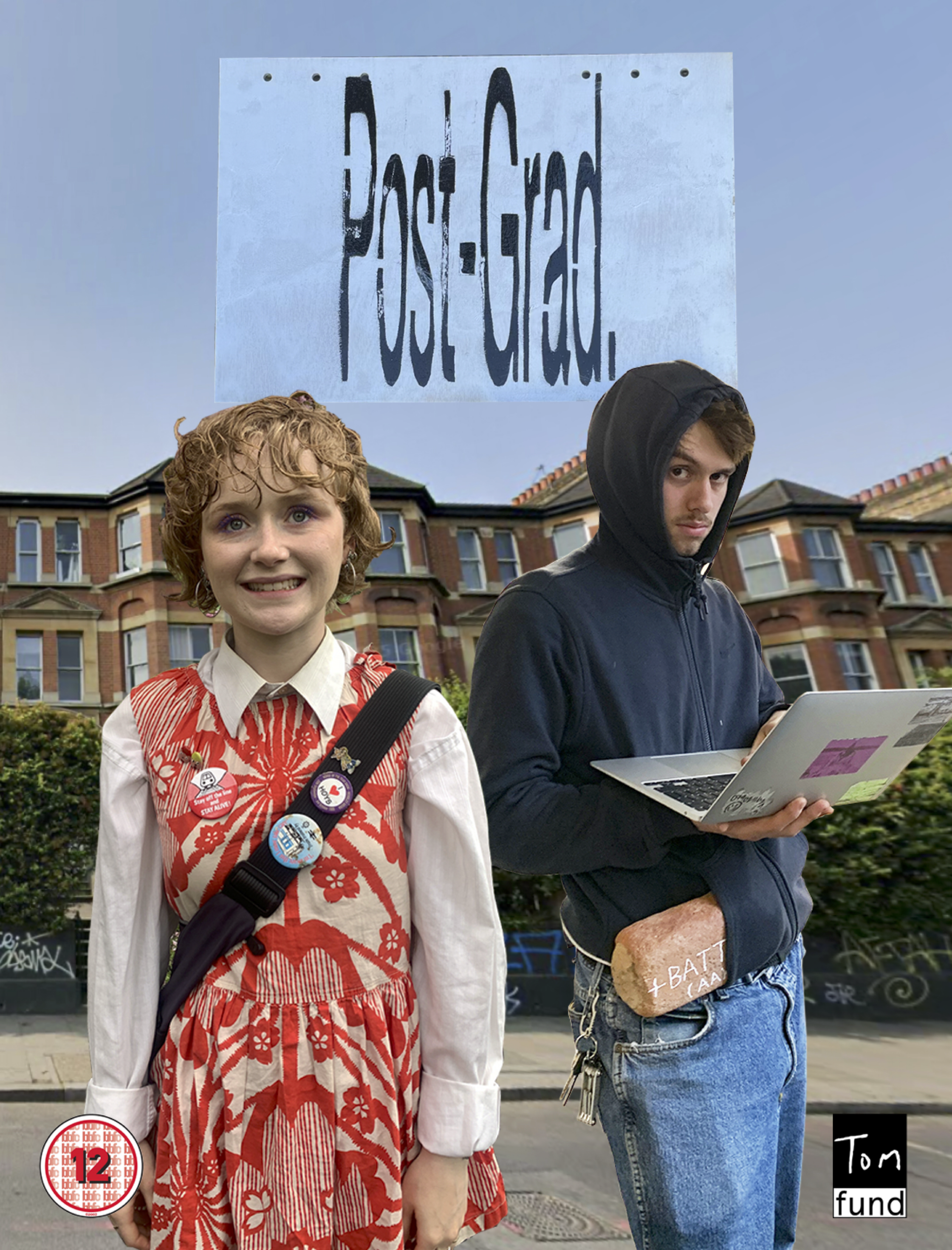
‘POST-GRAD’ is a short TV series made up of 6 mock-u-mentary style episodes which follow the lives of 2 students who have just graduated from an art school design course. It focuses in on the hardships and turbulence of the unenviable transition from student to post graduation. This series
is a fictionalised and hyperbolic reflection of our current situation as designers, individuals and collaborators.
The overall intention of the project is to create an honest and relatable portrayal of early post graduate life, particularly within the creative industries, focusing in on the emotional, practical, and creative challenges that arise during the often-overlooked transition from undergraduate life into the uncertainty of post-graduation adulthood. At its core, the project aims to explore this in between period: the loss of structure, the pressure to succeed creatively, and the shifting sense of identity that many young designers experience once formal education ends.
The mock-u-mentary style and tone will allow us to communicate and explore these serious topics with humour and a ‘tongue in cheek’ tone, with the intention of engagement and by focusing on two contrasting yet complementary characters, the project seeks to reflect the diverse ways graduates cope with similar pressures, highlighting both conflict and connection.
The award played a crucial role in allowing this project to move beyond an initial concept and into a more developed and grounded idea. The funding provided will make it possible for us to reach out and work with experienced mentors in fields relating to tv and film. This support will only be viable through the funding and will give us vital knowledge and experience to start the foundations of our series; helping us to make our script writing and sequencing translatable from page to the screen.
It has also acted as a motivator, a glue, both as collaborators between Eliza and Jakob but also to their creative outputs and design work, as its easy to allow real-life commitments and responsibilities to swamp creative outputs post university.
The next steps for the project involve continuing to develop the script and overall series based on the feedback and knowledge gained through mentorship. We aim to refine the episode outlines, deepen the characters and learn about production/ reach out to those who may be willing to help the with the project.
This project represents not only a creative endeavour but also a reflection of our own transition as emerging designers and storytellers, making its continued development both professionally and personally significant.
Jakob Icke: @jjjjjjjakob / jakobicke.cargo.site
Eliza Jacques: @gumpgirl / elizajacques.cargo.site
Quisque iaculis facilisis lacinia. Mauris euismod pellentesque tellus sit amet mollis.